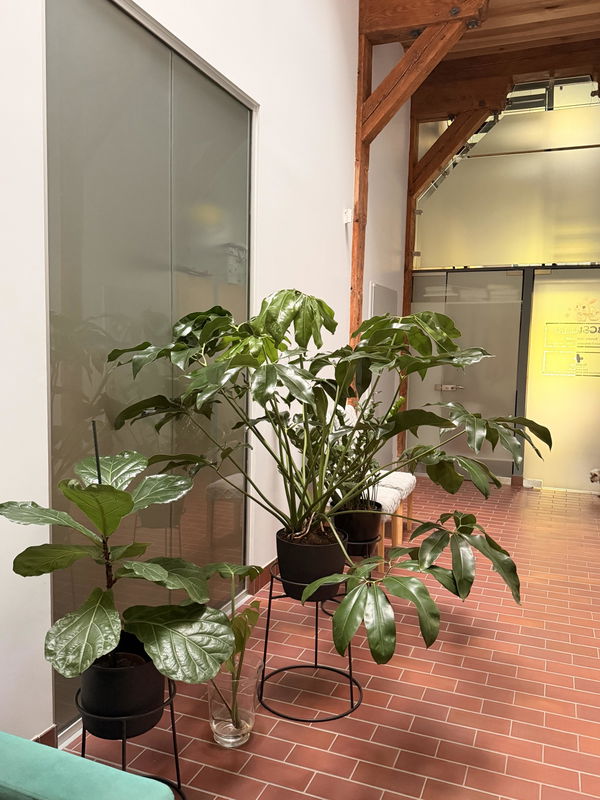
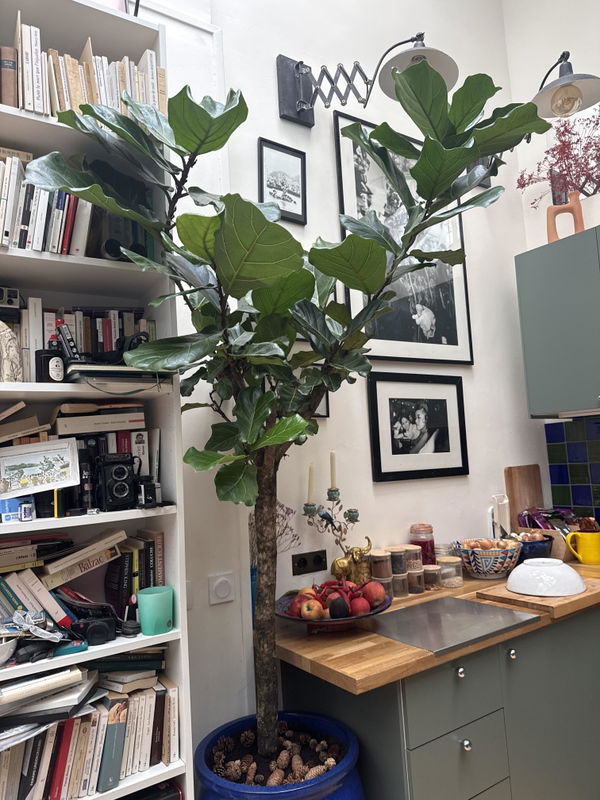
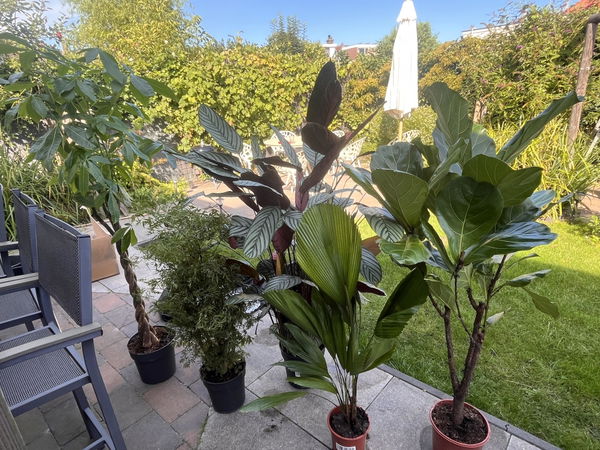
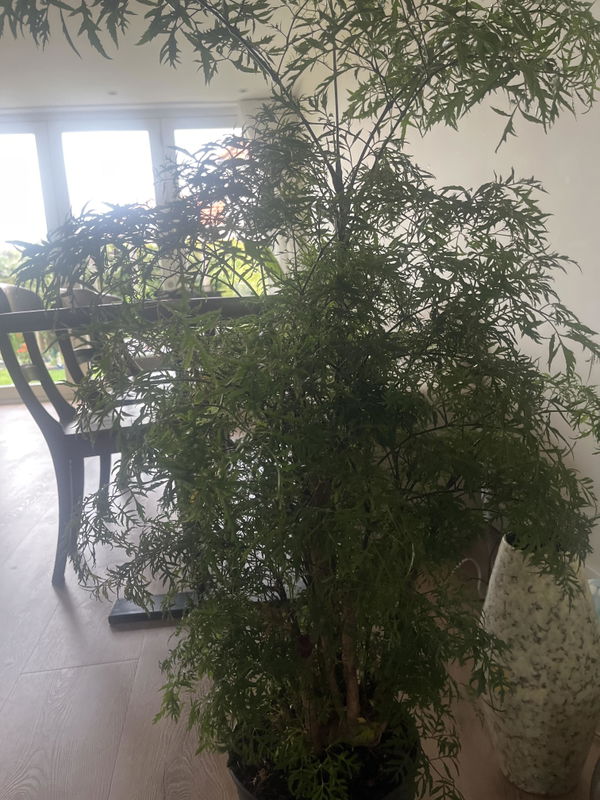
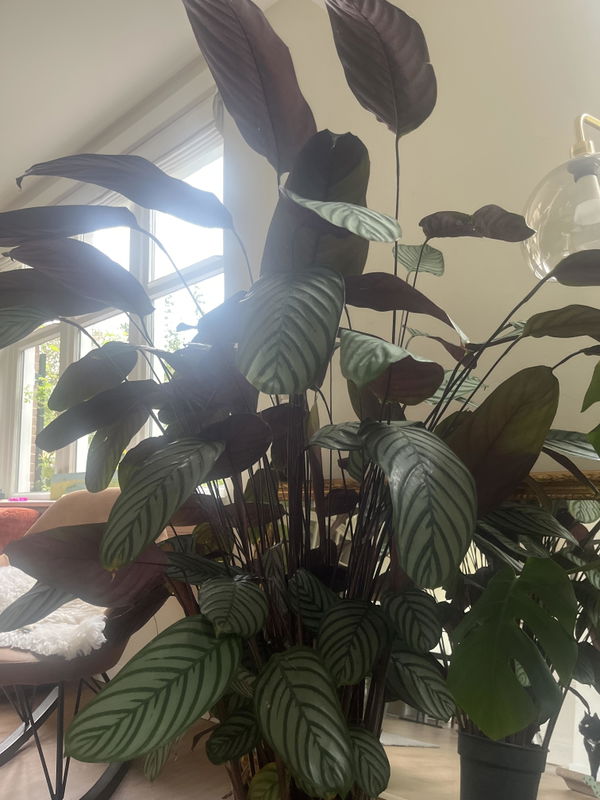
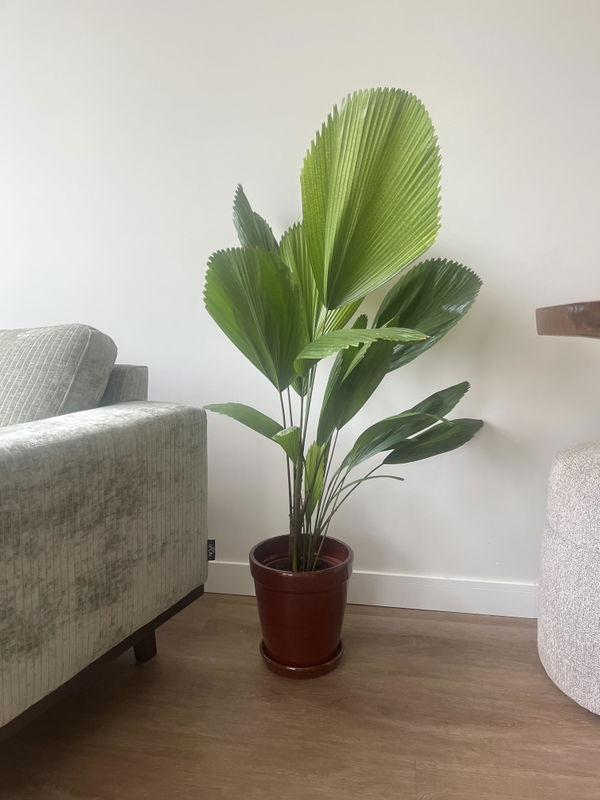
Straight from the greenhouse, sustainably grown to standards
Delivered safely in our own plant box
Matching decorative pot with 15% off
What does MPS mean?
MPS is an independent certification for sustainable horticulture. Certified growers record their use of energy, water, fertilisers and crop protection products and are audited on it. So you know your plant has been grown with care for people and the environment.
€289,95
Including VAT, excluding shipping
1
Choose a pot
15% off with this plant
These pots fit the nursery pot exactly. No measuring needed. Prices include 15% off with this plant.
Order now? Usually delivered within 4 to 5 working days
Free delivery from €99, otherwise €6,95
Pros and cons
According to our plant experts
+Pro: Large, leathery leaves with pale veins give it a stately look.
+Pro: A sturdy indoor tree that is less prone to leaf drop than many other ficus.
+Pro: Takes pruning well in spring, so you can keep it to size.
−Con: The milky sap can irritate; keep it out of reach of pets.
−Con: Needs plenty of light and reacts to draughts or being moved by dropping leaves.
Plant height may vary by up to 10 cm. Height includes the nursery pot. The nursery pot may differ from the one in the photo.
Secure payment
You pay through Shopify's secure checkout. Your payment details go straight to the payment provider; we never see or store them. With Klarna you can also pay later.
Type:Plant
Ficus benghalensis (banyan tree) tree de luxe 200 cm tall
Regular price€289,95 EUR
Sale priceRegular price
Unit price
/per
Usually delivered within 2 - 5 working days
Order today and your plant usually arrives within 4 to 5 working days.
MPS-certified grown
Our grower records energy, water, fertilisers and crop protection under the MPS label.
Grown in Europe
Direct from specialist growers in the Netherlands, Belgium and southern Europe.
More than 300 large plants
From indoor palm to olive tree, up to 3 metres tall.
I am very happy with my purchase! The plant is beautiful and huge. It arrived in perfect condition and was very well packaged and protected. I am extremely satisfied and would definitely recommend it!
★★★★★Beautiful healthy plant + quick and safe delivery
Very happy with the Kentia palm that I ordered. A beautiful, large palm that fits perfectly in my living room. Ordering it was super easy, communication was clear and the delivery was fast. I was a bit worried about how...
Esther Konijn Verified buyer
★★★★★Excellent customer service
Excellent customer service, fast shipping, and great prices. I am very happy with my shopping experience and would definitely recommend this store!
★★★★Het mag wel wat plant vriendelijker worden bezorgd
Het mag wel wat plant vriendelijker worden bezorgd. De plant kwam een beetje beschadigd aan. Door dat de bladeren op een onjuiste manier in de doos waren gestopt. Verder is het een mooie plant.
Ik ben blij verrast! Een mooie uitziende plant en goed verpakt ontvangen. Bij de mededeling vroeg ik of zij wilde kijken naar een rechtopstaande plant en als het kan iets groter dan aangegeven maat. Daar heeft de kweker ook goed...
This is how your plant reaches you whole and healthy.
1Fresh from the greenhouse
2Delivered safely
3All the way to your living room
All about
The Ficus dossier
Ficus
Ficuses grow in the tropics of Asia, Africa and Australia, from dense rainforests to open plains. The best-known houseplants from the family are the Ficus lyrata with its large violin-shaped leaves, the fine-leaved Ficus benjamina and the sturdy Ficus elastica.
What they share: glossy foliage, tree-like growth and a look that makes any room more mature.
Light
Water
Growth rate
CareModerate care
Pet-friendlyNo
Height70 - 270 cm
The care year
little to plenty
JFMAMJJASONDWaterFeedingRepotting
Read more about careShow less
Placement and light
Give a Ficus a light spot without bright afternoon sun; ochtend- of avondzon is prima. Belangrijk om te weten: een Ficus is honkvast. Choose a permanent spot and move it as little as possible, because moving and drafts can cause it to drop leaves.
Keep the temperature above 15 degrees and do not place it directly above a warm radiator.
Water and feeding
Water about once a week in summer and once every ten to fourteen days in winter. Let the top centimeters of soil dry first. Be cautious: too much water is the most common mistake with a Ficus.
Provide plant food every two weeks from March to September and wipe large leaves occasionally with a damp cloth.
Is something wrong with your Ficus?
In Ficus, leaf loss is usually a response to change: a move, a draft or a darker place. Give him time, he almost always recovers. Yellow leaves indicate too much water, brown edges indicate dry air. Sticky leaves may indicate scale or mealybug.
Repot a Ficus every two to three years in the spring, in a pot that is about twenty percent wider. Use light potting soil and a sturdy pot: large specimens are top heavy. Wear gloves because of the milky juice. You can find the matching decorative pots directly on this page.
Toxic to pets?
The milky sap of the Ficus is slightly poisonous to cats and dogs and can irritate the mouth and stomach when chewed. The sap can also be sensitive on the skin. Place the plant out of reach of nibbling pets or choose an animal-friendly alternative.
With enough light, a Ficus grows steadily and can grow into a real indoor tree indoors. Pruning is allowed throughout the spring and keeps the shape compact. Our XXL specimens have already been grown as full-fledged trees.
What is the difference between Ficus benghalensis and Ficus 'Audrey'?
Ficus 'Audrey' is a well-known form of Ficus benghalensis, the banyan tree. Both have large, leathery leaves with pale veins and need the same care. At XXLplant you buy the Ficus benghalensis from 150 to 200 cm tall, measured including the nursery pot.
How big does a Ficus benghalensis get?
In the wild the banyan tree grows into an enormous tree, but indoors it stays manageable and you can prune it in spring. With enough light it keeps growing steadily indoors. We sell it as a mature indoor tree of 150 to 200 cm.
Where should you place a Ficus benghalensis?
A Ficus benghalensis wants a bright spot with plenty of indirect light, for example near an east or west-facing window. Keep it out of harsh midday sun and draughts. It prefers a temperature between 15 and 25 °C.
How often should you water a Ficus benghalensis?
Only water once the top layer of soil has dried out slightly, and keep the soil lightly moist, not wet. Water less in winter. Misting the leaves now and then helps in dry air.
Is a Ficus benghalensis toxic to cats and dogs?
The milky sap of ficus species can irritate the skin, mouth and stomach. So keep a Ficus benghalensis out of reach of cats and dogs that nibble on plants. Wear gloves when pruning.
Why is my Ficus benghalensis losing leaves after delivery?
A ficus reacts to a new spot with different light and temperature and may drop a few leaves. Give it a permanent, bright spot out of draughts and move it as little as possible afterwards. After a few weeks it settles in and starts growing again.
How is a Ficus benghalensis delivered?
Your ficus travels upright in its own plant box, with the crown in a paper sleeve and the pot secured. The largest plants go with a specialised carrier, otherwise with PostNL or DHL. If it arrives damaged, send us photos and we will find a solution.
This is the one
Ficus benghalensis (banyan tree) tree de luxe 200 cm tall
★★★★★ 4.9/5
€289,95
In stock, fresh from the grower
Adding to cart didn't work. Please try again or choose a size above.